


Every car manufacturer seeks a refined way of making their cars efficient and conservative in the way the automobiles use fuel and convert it to energy.
Electric Cars have the Traction battery pack which store power that is used to power the Electric Traction Motor. In comparison, Hydrogen Powered Vehicles (FCEVs) produce electricity from fuel cells powered by hydrogen.
1. Fueling Up:
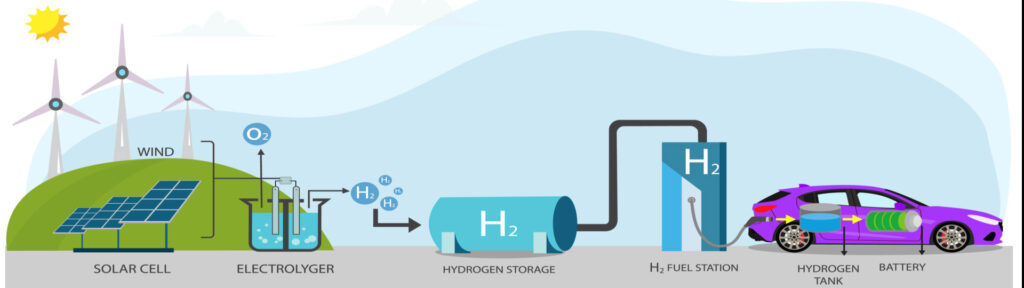
- Hydrogen is pumped into the car’s high-pressure tanks, similar to filling a gasoline car.
2. Inside the Fuel Cell:
- The hydrogen enters the fuel cell stack, where it encounters a membrane electrolyte.
- On one side of the membrane is the hydrogen, and on the other side is oxygen drawn in from the air.
- A catalyst in the membrane helps the hydrogen and oxygen to react, creating electricity and water vapor as the only byproducts.
3. Powering the Car:
- The electricity generated by the fuel cell powers the car’s electric motor, which turns the wheels.
- A small battery pack may also be present to store excess energy and provide auxiliary power.
4. Emissions:
- Since the only emission from the tailpipe is water vapor, hydrogen fuel cell cars are considered zero-emission vehicles.
Here are some of the key advantages of hydrogen fuel cell cars:
- Zero emissions: Unlike gasoline or diesel cars, hydrogen fuel cell cars produce no harmful emissions, making them a cleaner alternative for transportation.
- Fast refueling: Refueling a hydrogen car takes about 5 minutes, similar to a gasoline car, compared to the longer charging times of battery-electric vehicles.
- Long range: Hydrogen fuel cell cars typically have a range of 300-400 miles, comparable to gasoline cars.
