


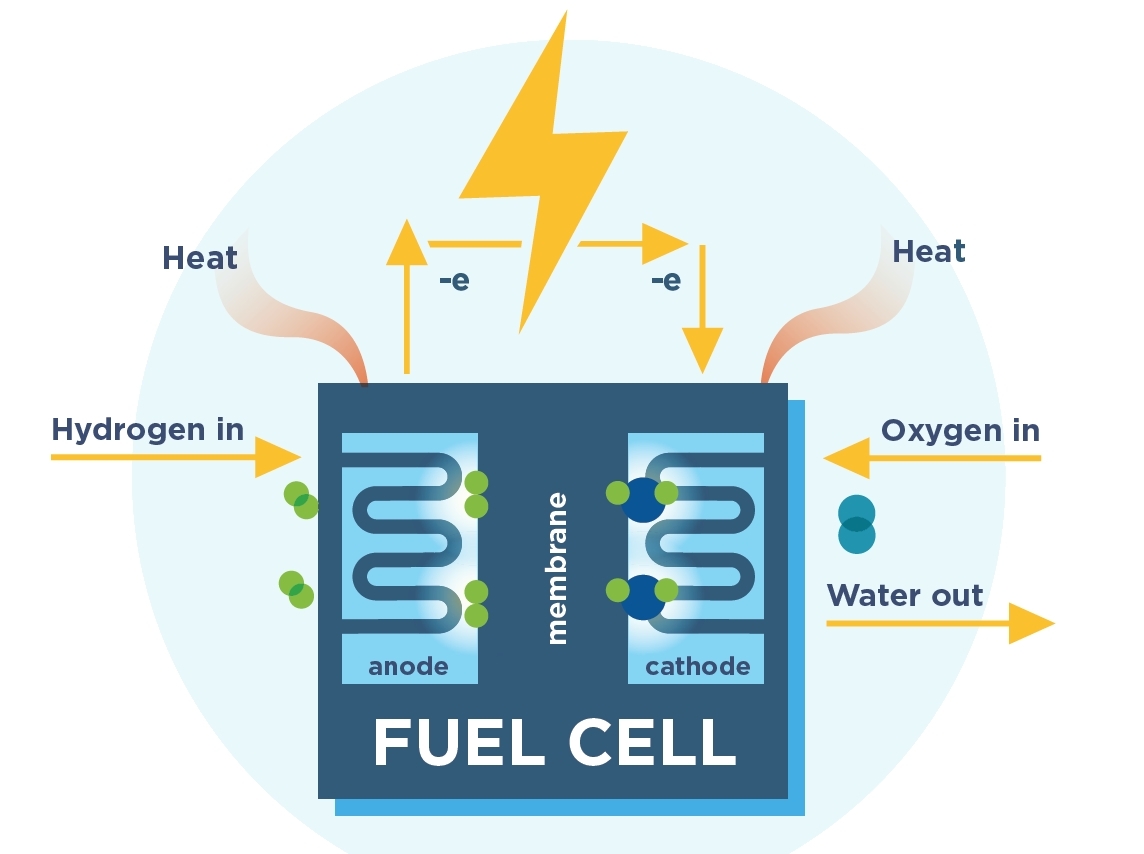

Hydrogen fuel is a clean-burning alternative to traditional fossil fuels like gasoline and diesel. It produces zero emissions when used in a fuel cell vehicle, only releasing water vapor as a byproduct. This makes it a promising option for reducing greenhouse gas emissions and air pollution from transportation.
Hydrogen fuel, the abundant and versatile element, holds immense potential to revolutionize various future technologies across different sectors.
How does it work in transportation?
Hydrogen fuel cells work by combining hydrogen with oxygen to produce electricity (in a process known as Electrolysis). This electricity powers an electric motor, which propels the vehicle. Unlike battery-electric vehicles, hydrogen fuel cell vehicles can be refueled quickly in a matter of minutes, similar to gasoline vehicles.

Benefits of hydrogen fuel in transportation:
- Zero emissions: Hydrogen fuel cell vehicles produce no tailpipe emissions, helping to improve air quality and combat climate change.
- Long range: Hydrogen fuel cell vehicles can have a similar range to gasoline vehicles, making them suitable for long-distance travel.
- Fast refueling: Hydrogen fuel cell vehicles can be refueled in minutes, similar to gasoline vehicles.
- High efficiency: Hydrogen fuel cells are very efficient at converting hydrogen into electricity.
Challenges of hydrogen fuel in transportation:
- Cost: Hydrogen fuel cell vehicles are currently more expensive than gasoline or battery-electric vehicles.
- Infrastructure: The infrastructure for hydrogen production, storage, and transportation is still limited.
- Hydrogen production: Most hydrogen today is produced from natural gas, which is not a renewable source. To be truly sustainable, hydrogen must be produced from renewable sources like wind or solar power.
Current applications of hydrogen fuel in transportation:
- Light-duty vehicles: There are a growing number of hydrogen fuel cell cars available on the market, although they are still relatively rare.
- Buses and trucks: Hydrogen fuel cell buses and trucks are being piloted in various cities around the world.
- Forklifts: Hydrogen fuel cell forklifts are becoming increasingly popular in warehouses and other industrial settings.
The future of hydrogen fuel in transportation:

The future of hydrogen fuel in transportation is uncertain, but it has the potential to play a significant role in reducing emissions from the sector. The development of more affordable and efficient hydrogen fuel cell technology, as well as the expansion of hydrogen infrastructure, will be critical to its success.
Here are some additional points to consider:
- The cost of hydrogen fuel cell vehicles is expected to decrease in the coming years as production volumes increase.
- Governments around the world are investing in hydrogen fuel research and development, which could help to accelerate its adoption.
- The development of new technologies, such as solid-state hydrogen fuel cells, could make hydrogen fuel cell vehicles even more efficient and affordable.
Overall, hydrogen fuel has the potential to be a game-changer for the transportation industry. However, there are still some challenges that need to be addressed before it can become a mainstream fuel source.